
A full-length glass mirror on a gym wall is a liability. A dropped weight, a stumble during a dance routine, a medicine ball that bounces wrong any impact can shatter a glass mirror into dangerous shards in a space full of people in bare feet or light shoes. Insurance assessors know this. Building managers know this. Yet glass mirrors persist because people assume there’s no alternative that looks as good.
There is. Mirror acrylic provides a true reflective surface not a blurred or distorted approximation at half the weight of glass, with dramatically better impact resistance and none of the shatter risk.
Reflection Quality
The most common concern: “Will it look as good as glass?” In a gym or dance studio setting, yes. Mirror acrylic uses a vacuum-deposited metallic coating that produces a clear, consistent reflection across the full panel. For checking form during weightlifting, monitoring posture in a yoga class, or watching choreography in a dance rehearsal, the image quality is more than adequate.
Where glass does have a slight edge is in absolute optical flatness very large glass panels can produce a marginally sharper reflection than acrylic, which has a tiny amount of surface flex. In practice, once the acrylic panel is mounted flat against a wall, this difference is negligible. You’d need to put them side by side and look closely to spot it.
Weight and Installation
A 3mm mirror acrylic panel weighs approximately half what an equivalent glass mirror weighs. For a large wall installation say a 3-metre run of full-height mirror panels the weight difference is significant. Lighter panels mean simpler wall fixings, lower structural load on the wall, faster installation, and easier replacement if a panel is ever damaged.
Mirror acrylic can be fixed with mirror-safe adhesive for a clean, seamless look, or with mechanical fixings (screws with dome caps and rubber washers) for easy removal. Glass mirrors typically require heavy-duty fixings, mirror clips, or specialist adhesive and once bonded, they’re difficult to remove without breaking.
Impact Resistance and Safety
This is the decisive factor. Mirror acrylic does not shatter. Full stop. It can take impacts that would destroy a glass mirror and in a gym or studio, those impacts happen. Weights get dropped. People back into walls. Equipment swings. Children in dance classes are unpredictable.
If mirror acrylic is somehow damaged (it’s extremely difficult to break), it deforms or cracks rather than exploding into shards. The risk profile is fundamentally different from glass, which is why mirror acrylic is increasingly specified by leisure operators, local authorities, and insurance-conscious businesses.
Scratch Resistance
Glass is harder than acrylic and more resistant to surface scratching. In a gym setting, the mirror surface shouldn’t be getting touched regularly but it happens. The good news: minor scratches on acrylic can be polished out with acrylic polish and a soft cloth. You can’t polish scratches out of glass. Deeper scratches or scuffs can be sanded and repolished. For high-traffic areas, the panels come with a protective film that can be left on during installation and removed once the surrounding work is complete.
Cost
Mirror acrylic is typically cheaper per square metre than quality glass mirror, and significantly cheaper to install. The lighter weight means no specialist lifting equipment, fewer fixings, and faster labour time. For a full wall installation, the total project cost material plus fitting is usually 30-50% less than the equivalent glass mirror job.
Which Colour?
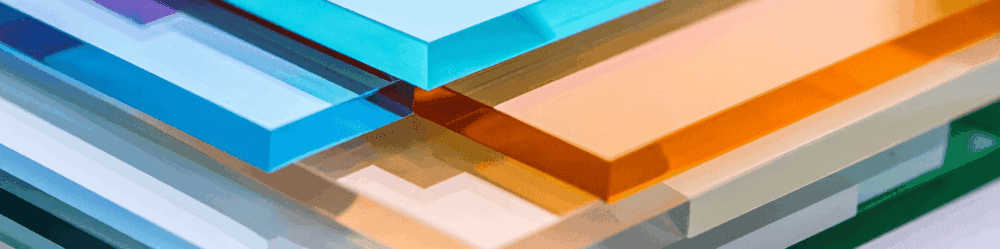
Silver mirror is the standard choice for gyms and dance studios it produces the most natural, true-to-life reflection. But mirror acrylic is available in a range of tinted colours including gold, rose gold, bronze, blue, green, red, and purple. Coloured mirror panels work well as feature walls in boutique fitness studios, PT spaces and branded gym environments where the mirror doubles as a design element.
Sizing and Ordering
Standard 3mm mirror acrylic sheets can be ordered cut to size. For a full wall mirror installation, work out your panel layout first it’s more practical to use multiple panels butted together than to handle a single enormous sheet. Joints between panels can be minimised by precision cutting and careful alignment during installation.
Get in touch with panel sizes and the team can advise on the most efficient cutting layout for your wall dimensions.