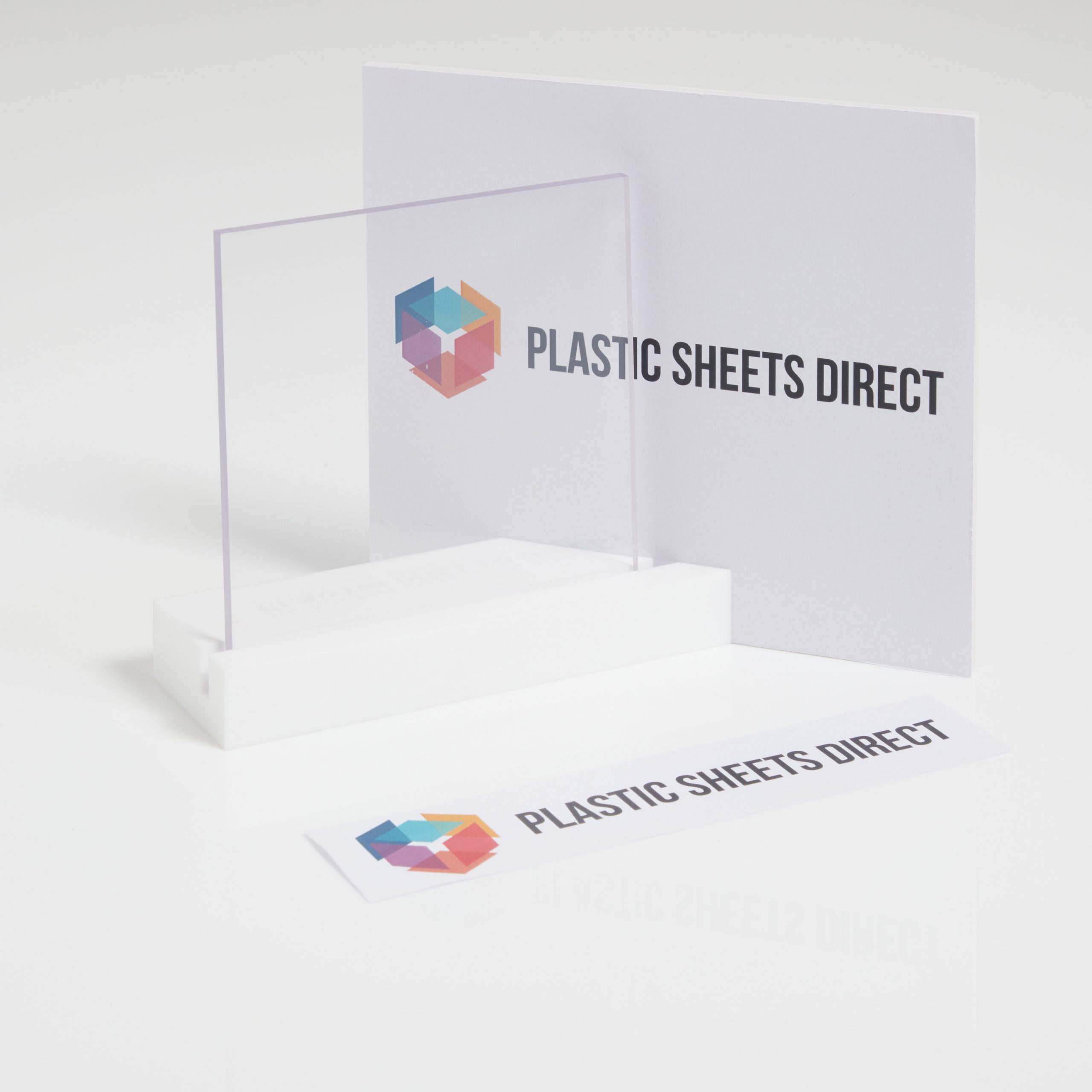

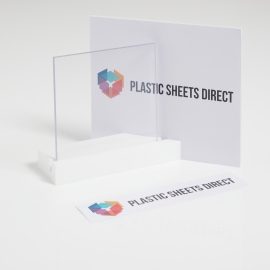
2mm Clear PETG
From £0.05

Polyethylene Terephthalate Glycol, more commonly known as PETG, is a cost-effective, durable and strong alternative to acrylic. It features unique characteristics that make it preferable for high strength display units and impact-resistant glazing.
Product description
Polyethylene Terephthalate Glycol, more commonly known as PETG, is a cost-effective, durable and strong alternative to acrylic. It features unique characteristics that make it preferable for high strength display units and impact-resistant glazing.
PETG is impact resistant and durable making it the material of choice for heat-forming processes, including 3D printing, routing, bending and die cutting.
Properties
Key Mechanical & Physical Properties
- High Impact Resistance: PETG is extremely durable and can withstand significant energy from sudden shocks or drops without shattering.
- Flexibility & Ductility: It is flexible meaning it will often bend or deform under stress rather than snapping abruptly.
- Optical Clarity: In its natural state, it is highly transparent, allowing approximately 90% light transmission, making it ideal for light diffusers and clear containers.
- Heat Resistance: It maintains structural integrity up to approximately 70-80̊ .
- Chemical Stability: Highly resistant to many acids, alkalis, oil, and greases. It also offers good resistance to alcohols and water, making it suitable for both medical and outdoor environments.
- Food Safety: PETG is FDA-compliant and widely used for food and beverage containers.
- UV Stable: Good resistance to UV light, making it suitable for outdoor applications.
Usage
Common Industrial Applications
PETG is chosen for its chemical resistance, transparency, and impact strength.
- Retail & Signage:Frequently used for point-of-sale displays and indoor/outdoor signage because it is easily coloured and more durable than acrylic.
- Industrial Guards:Transparent machine guards and safety barriers are often made of PETG because it is less brittle than acrylic and easier to form than polycarbonate.
Similar Products
-
3mm Clear Recycled Acrylic
From £0.22Select options -
3mm Clear Acrylic
From £0.08Select options -
15mm Clear Acrylic
From £0.45Select options -
20mm Clear Acrylic
From £0.60Select options -
5mm Clear Acrylic
From £0.13Select options -
4mm Clear Acrylic
From £0.11Select options -
6mm Clear PETG
From £0.15Select options -
12mm Clear Acrylic
From £0.34Select options